PulseChain Bridge is a decentralized bridge that allows users to easily & seamlessly bridge assets—including native and ERC20 assets—between Ethereum and PulseChain.
Moving assets between Ethereum and PulseChain requires a reliable cross chain bridge, which is essential for cross-chain compatibility and efficient asset transfers in the growing PulseChain ecosystem. This guide covers everything you need to know about using PulseBridge to transfer assets securely, troubleshoot common issues, and understand the fee structure that makes this the leading pulsechain bridge in the world of blockchain bridges in 2026.
Quick Answers: How to Bridge PulseChain (bridge pulsechain) Right Now
The main way to bridge PulseChain today is via PulseBridge, often searched as pulsebridge, bridgepulse, bridge pulse, bridgepulsechain, pulsechainbridge, or pulse chain bridge. Here’s the process:
- Visit the official PulseBridge site at bridge.pulsechain.com (verify the URL in your browser).
- Connect MetaMask or compatible wallet software.
- Select Ethereum as source network and PulseChain as destination network.
- Choose your token and enter the amount.
- Review transaction details and confirm in your wallet.
- Wait for Ethereum finality (typically 5–15 minutes depending on gas fees).
- Once the transaction is finalized, you will receive assets on PulseChain in your wallet.
PulseChain side processes near-instantly once the bridge transaction finalizes and you receive assets. Users experiencing “pulsechain bridge not working” or “pulsechain transaction not found” errors should check the troubleshooting section below. PulseBridge operates as a trustless protocol—you always confirm transactions in your own wallet.
What Is PulseChain and Why You Need a More Secure PulseChain Bridge?
PulseChain is a Layer-1 blockchain that is a fork of Ethereum, designed to be more scalable and faster while maintaining compatibility with the Ethereum network. Launched in mid-2023, PulseChain operates as a full-state fork of Ethereum, meaning it includes all Ethereum balances and smart contracts at the time of the fork, creating a parallel network with improved economics.
PulseChain utilizes 10-second block times, approximately 17% faster than Ethereum’s 12-second intervals, and is designed for significantly lower gas fees. PulseChain provides access to its own native applications, such as the PulseX decentralized exchange.
A pulsechain bridge is required because digital assets on Ethereum cannot appear on PulseChain without cross chain bridges. The primary purpose of the bridging process is to bypass high Ethereum gas fees. Bridging assets not only enables seamless value transfer between networks but also drives the growth of the PulseChain ecosystem by increasing participation and adoption. Whether you search “bridge pulsechain,” “bridgepulsechain,” or “pulse bridge,” you’re looking for the same concept: moving value between pulsechain networks securely.
Bridging assets using PulseBridge involves a straightforward process that includes connecting a wallet, selecting the asset, choosing the source and destination networks, entering the amount, reviewing transaction details, and confirming the transfer.
PulseBridge / BridgePulse Overview: The Core PulseChain Bridge Explained
PulseBridge operates as a specialized cross-chain bridge protocol designed to enable seamless asset transfers between Ethereum and PulseChain networks, addressing issues like high gas fees and slow transaction speeds. It’s a forked and upgraded version of OmniBridge, deployed as audited smart contracts on both chains, and is engineered for superior efficiency and speed, delivering faster transaction confirmation times through its streamlined infrastructure.
Key properties of this efficient and fast pulsechain bridge:
- Non-custodial and permissionless
- Supports ERC-20 tokens, NFTs, and ERC-1155 assets
- Transparent on-chain statistics
- 0% inbound fees to PulseChain
- ~0.3% outbound fees to Ethereum
The PulseChain network is maintained by a decentralized community of validators and developers, ensuring its functionality and security.
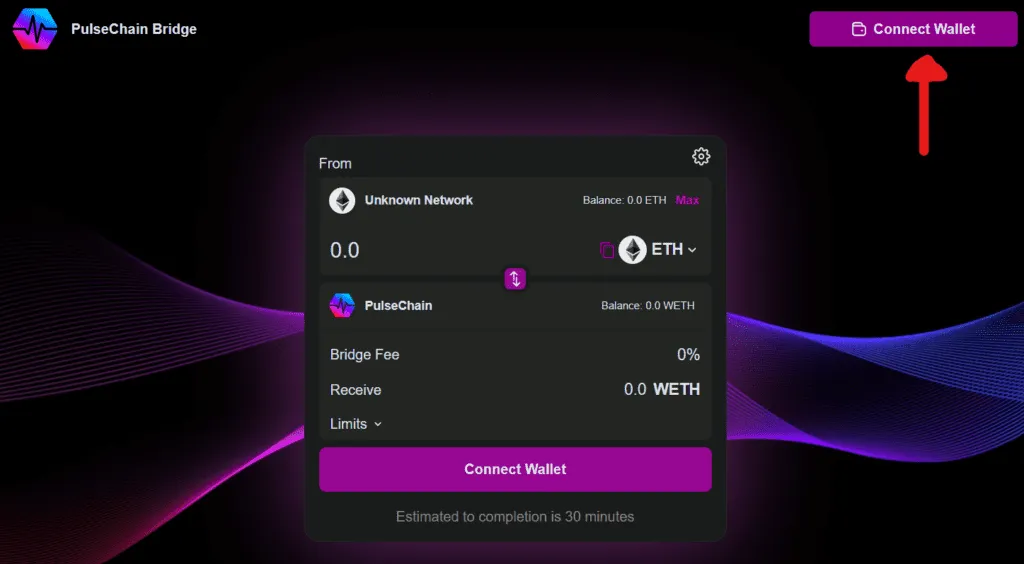
How to Transfer Assets to PulseChain with PulseBridge (bridge pulsechain Step-by-Step)
Bridging assets using PulseBridge involves a straightforward process. The bridging process allows for both depositing assets to and withdrawing assets from the PulseChain network.
To transfer assets from Ethereum to PulseChain:
- Navigate to bridge.pulsechain.com and verify the URL.
- Connect your wallet and ensure you have ETH for gas.
- Select Ethereum as source and PulseChain as destination.
- Choose supported tokens (USDC, USDT, WETH are common).
- Enter amount and review gas estimates.
- Confirm the transaction.
The bridge locks tokens in an Ethereum smart contract and mints corresponding tokens on PulseChain after completion. Add bridged token contract addresses to your wallet to see balances. For reverse direction, swap source network and destination network in the UI.
Ethereum to PulseChain Bridge Details (pulse chain bridge Asset Types)
PulseBridge supports a wide range of asset types, allowing users to bridge tokens, NFTs, and other digital assets securely between Ethereum and PulseChain. PulseBridge allows users to transfer various types of digital assets, including ERC-20 tokens and NFTs, facilitating easy access to the pulsechain ecosystem.
Commonly bridged assets:
| Asset Type | Examples | Support Status |
|---|---|---|
| ERC-20 | USDC, USDT, WETH | Fully supported |
| ERC-721 | NFT collections | Supported |
| ERC-1155 | Gaming tokens | Supported |
Some obscure tokens require community configuration for correct metadata. Verify token lists before bridging large amounts and check live stats dashboards for current bridge volumes.
Fee Model and Tokenomics of PulseBridge (pulse bridge Economics)
PulseBridge offers a unique fee structure with 0% inbound fees for transferring assets from Ethereum to PulseChain, making inbound transfers to PulseChain completely free and maximizing cost savings for users. You only pay standard Ethereum gas.
When transferring assets from PulseChain back to Ethereum, PulseBridge charges a standard outbound fee of 0.3%, similar to other DeFi bridges.
Example with $1,000 USDC:
- Inbound (ETH → PulseChain): Receive $1,000 (minus ~$20 ETH gas).
- Outbound (PulseChain → ETH): Receive ~$997 after 0.3% fee.
PulseBridge’s fee structure is designed to encourage users to bring value into the PulseChain ecosystem rather than extracting it, promoting a sustainable and sticky network.
Security Model: How the PulseChain Bridge Protects Users
One of the key features of PulseBridge is its integration of secure, trustless bridge operations, ensuring that assets are properly locked on the source chain and minted or unlocked on the destination chain. The bridge utilizes a secure validator network for trustworthy transfers of assets between chains.
The PulseBridge protocol is designed to provide a secure and efficient method for cross-chain transfers, utilizing audited smart contracts to ensure the safety of transactions.
Security best practices:
- Verify URLs match official PulseBridge domains.
- Never approve unlimited allowances.
- Use hardware wallets for large transfers.
- Start with test transactions under $100.
User Experience: 0% Inbound Fees and Benevolent Onboarding on PulseChain
PulseBridge makes the bridge pulsechain process a user friendly solution for newcomers. Wallets arriving on PulseChain with zero PLS may receive a small amount (~0.01–0.05 PLS) to cover initial gas, preventing users from getting stuck after bridging.
The UI features clear network selectors, asset pickers, and progress indicators. Documentation covers specific cases like bridging stablecoins into PulseChain’s DeFi ecosystem for yield farming or liquidity provisioning.
Troubleshooting: PulseChain Bridge Not Working & PulseChain Transaction Not Found
Common issues when users report “pulsechain bridge not working” or “pulsechain transaction not found”:
| Issue | Solution |
|---|---|
| Wrong network in wallet | Switch to correct RPC endpoint. |
| Insufficient ETH/PLS | Buy ETH or receive PLS for gas. |
| Fake bridge URL | Verify official domain. |
| Transaction pending | Wait 20–40 Ethereum confirmations. |
Check transaction hash on Etherscan for Ethereum side and explorer.pulsechain.com for PulseChain. Explorers may differ—a confirmed Ethereum transaction needs additional blocks before PulseChain processing. Contact community support only after waiting recommended time windows.
Monitoring BridgePulse Activity, Crypto Prices and PulseChain Liquidity Flows
Track bridgepulse usage via public analytics dashboards showing:
- Total value locked (TVL)
- 24-hour bridge volume
- Top bridged tokens (stablecoins typically 70%+)
- Net inflow vs outflow
- Crypto prices for bridged assets
DeFi participants watch these metrics to time liquidity deployment and arbitrage strategies. Monitoring helps detect anomalies like maintenance pauses. Access live price chart data to track crypto prices for bridged assets and scan historical trends since mainnet launch.
Best Practices When Using Any PulseChain Bridge
- Start with small test transactions on any new route.
- Verify that you interact with the official PulseBridge app, not phishing clones.
- Confirm token contracts via reputable explorers before large transfers.
- Enable wallet security features and transaction simulations on your browser wallet extension.
- Avoid bridging during extreme Ethereum congestion.
- Stake time for confirmations rather than rushing.
The Future of BridgePulse among Cross-Chain Bridges
Pulsechain bridge ecosystem continues evolving. Potential developments include additional source chains (Polygon, BNB Chain), trust-minimized bridges using zk-proofs, and enhanced governance for fee parameters. Interoperability with L2s could make “bridge pulsechain” a common step in multi-chain DeFi strategies. Stay updated via official channels for roadmap announcements.
Why PulseBridge Remains the Go-To PulseChain Bridge
PulseBridge is the most secure pulsechain bridge for moving assets between Ethereum and PulseChain. With 0% inbound fees, deflationary fee handling, trustless smart contracts, and broad asset support, it serves users searching “pulsechain bridge,” “pulsechainbridge,” or “bridgepulsechain.”
Verify URLs, test with small amounts, and leverage official resources. PulseBridge remains core infrastructure for PulseChain’s growing DeFi and NFT ecosystem in 2026.